Blog:
In other words
Why DOES a ScribeShadow translation
still need to be professionally edited?
April 2026
I recently worked on several novel translations that one of my clients had translated from English into German using a software called ScribeShadow. At first glance, the software outputs were surprisingly decent machine translations – however, the drafts still required heavy editing to avoid terrible translation blunders and unnatural-sounding language.
ScribeShadow is an AI-powered writing tool that has become increasingly popular since 2025, especially among indie authors. It allows writers to translate chapters or entire novels into over a dozen languages and can thereby make their books accessible to readers around the world. A huge opportunity for indie authors!
The developers market ScribeShadow as a tool which produces “high-quality novel translations” whose output is “accurate enough to publish without additional proofreading”.
Eh, no. Native German speaker here.
NOT “GOOD ENOUGH”: At this point, ScribeShadow is a long way from being “accurate enough to publish without additional proofreading”. While it can produce surprisingly good draft translations, they are nowhere near accurate enough to be published as is.
But before I get into what the software doesn’t accomplish well, here’s how it compares to other AI translation tools:
How does ScribeShadow compare to other AI translation software?
ScribeShadow is the first software I’ve come across that produces a workable draft translation into German. In fact, I’ve been quite impressed with it, as far as machine translations go.
Other AI translations I’ve seen (e.g. by DeepL, GoogleTranslate or ChatGPT) were so poorly rendered that editing them wasn’t even worth the effort – in fact, I found it was faster to translate the texts from scratch rather than edit the machine translation.
Although ScribeShadow translations are much better than what other AI translation tools spit out, they can only be considered drafts and must be edited by a human before they are published.
What does ScribeShadow do particularly well?
1) MAINTAINS THE STRUCTURE AND LAYOUT OF THE BOOK
ScribeShadow already puts chapter headings, quotation marks, paragraphs and paragraph returns in the correct places. This helpful framework saves the human translator a lot of time, especially in segments with dialogue, which requires lots of punctuation and line breaks.
Note that this only works if the original manuscript has been correctly formatted. Any formatting errors in the English manuscript will, of course, carry over into the AI draft translation. Also, the final translation still needs to be proofread for formatting issues, as sometimes glitches occur in the software, even when the original file was flawless in that regard.
2) CORRECTLY TRANSLATES SIMPLE, CLEAR AND UNAMBIGUOUS SENTENCES
For example: “The house was on fire. They all ran outside.”
Das Haus brannte. Sie rannten alle nach draußen.
It wouldn’t take a human long to translate clear, unambiguous sentences like these, but they still take time to type out.
TIME SAVER: ScribeShadow saves many hours of work by translating a lot of sentences correctly.
In a book of several hundred pages, there are tons of simple sentences or sentence fragments, and those seconds quickly turn into minutes, which become hours, if a translator has to type them all out manually.
Note that translators also have to consider flow and pacing, which we can manipulate not just by sentence length, but also word choice. So, although ScribeShadow translates many short and “straightforward” sentences correctly, they sometimes still need to be tweaked to nail the voice, flow and pacing.
3) SPELLING AND PUNCTUATION, EVEN MOST OF THE GRAMMAR, ARE NEARLY FLAWLESS
There tend to be only few spelling and punctuation errors in a ScribeShadow draft translation. This isn’t surprising, as the software generally takes official spellings from the web. In that regard, it is more reliable than a human, who tend to make typos.
However, I found the spelling of some place names and characters to be inconsistent, so this definitely needs to be checked. There are also made-up words that are a little concerning, which I’ll get to later.
Is a ScribeShadow translation good enough for publication?
No, absolutely not. A ScribeShadow translation is not “good enough” for publication and can only be considered a draft. I dare say that, at this stage, this applies to any language combination, not only English-to-German translations.
Even if the draft is run through a proofreading software, it is far from publication-ready. Proofreading is not what it needs.
It needs a comprehensive translation edit.
An unedited ScribeShadow translation in German reads like a well-developed story – the characters and their arcs are fleshed out, the story hits all the beats, we have a proper beginning, middle, and end – except that it comes across as if it was written by someone who couldn’t write and, even worse, skipped the line editor.
EXAMPLE: “She rose to the tips of her toes to reach for a box, grab it and give it to her little brother.”
Yikes!
There’s nothing wrong with the sentence in terms of grammar, punctuation and typography, but it still reads horribly, doesn’t it?
BEWARE: Good writing is about a lot more than just following the correct spelling, grammar and punctuation conventions. AI translations, including those produced by ScribeShadow, have a lot of poorly phrased sentences. Imagine being a reader and having to work your way through chapters of that stuff.
ScribeShadow draft translations require a professional edit, which is an in-depth process that involves checking the draft translation against the original and making the final product read as if it was written by a native German speaker.
Why is it important to publish a solid translation of your book?
German readers, and I dare say readers of any language, tend to be critical when reading books in their native language, and will get annoyed by terrible writing.
I’ve come across 1-star Amazon.de reviews left by readers who said they liked the story but were so upset about the German language issues that they stopped reading after the first few chapters, calling it “exhausting to read” and some sentences “impossible to understand”. Ouch.
I’ve seen other customers state that they would’ve given the novel a 5-star rating, based on the story and characters, but that the book had “clearly been translated by a machine”, with too many “literal translations from English”. They ended up awarding it only 3 or 4 stars because of it.
MAKE SURE THE WRITING IS GOOD: Readers are picky about language because it is the backbone of any story. If you’ve published books before, you’re probably painfully aware of just how much that is true. Readers want to be immersed in the story, not feel confused by poor phrasing and word choices.
Readers will detect weaknesses in the translation, such as:
- repetitions
- unnatural, awkward or clumsy sentences
- flat phrasing
- style inconsistencies
- literal translations
- poorly translated metaphors, analogies and similes, and much more.
Below are a few examples of issues I’ve noticed in a ScribeShadow draft translation that required heavy editing across the whole manuscript.
What does ScribeShadow translate poorly (into German)?
Let’s look at some examples of areas in which ScribeShadow messes up big-time:
1) FORMAL AND INFORMAL SPEECH
This is an important one, which is why I mention it first.
In its current iteration, ScribeShadow doesn’t know when to use formal and informal speech when two characters in the story address each other with “you”.
As in many other languages, the distinction between the formal and informal speech is very important in German because there are two ways of addressing a person with “you”: the formal you (Sie) and the informal you (du). There is a third and now outdated form, Ihr, used mostly in German historical novels, but for the sake of simplicity, I’ll stick to two here.
The English manuscript just has “you” throughout the story, whether it is two siblings or a royal and her servant talking. ScribeShadow doesn’t distinguish between the two because it can’t detect the relationship between characters the way a human can.
In the novel I recently edited, ScribeShadow sometimes translated those “you”s into the formal Sie and other times, almost randomly, into the informal du – even within the same conversation between the same characters. That is thoroughly jarring to a German reader.
OBVIOUSLY AI-TRANSLATED: Confusing Sie and du in a German book immediately makes it obvious to readers that it was machine-translated, as no human translator, regardless of their experience level, would be that inconsistent.
As readers, we can establish whether two characters are formal or informal with each other based on:
- the time in which the story takes place: people were much more formal in the past than they are today
- the context: the characters might be formal in public but informal in private
- the cultural setting: some cultures don’t use the same level of formality in their speech as others
- the relationship: relatives and friends are usually informal, while bosses and coworkers tend to use formal speech.
The human translator will consider all these factors before deciding whether Sie or du works best in each case.
AI can’t make those distinctions, nor does it have human intuition to make the right call.
ScribeShadow developers are currently working on a way to allow their users to apply character relationship settings in the software, which will tell it whether to use Sie or du between any two character pairs.
But even then it won’t always be accurate because we can have characters flirting or joking with each other, which can partly be conveyed by making them switch between formal and informal speech. There’s also the issue of characters starting out as acquaintances at the beginning of a story and becoming best friends or lovers partway through the book.
At what point in the story do they switch from the formal to the informal tone? Will the software pick up on this detail and switch to the appropriate form of address?
No, it won’t.
WE WANT STORIES TO MAKE US FEEL: Don’t confuse your readers. Having inappropriate forms of address in your book pulls your readers out of the story and kills the vibe. Fast.
2) ADJECTIVES
ScribeShadow seems to translate adjectives based on the most likely or most frequently used equivalent in German. However, those often aren’t the ones that work the best in the current context or scene.
The human translator reads between the lines and understands what it is the character feels at that moment, based on their personality and what is happening in the scene.
For example: “She was scandalized.”
ScribeShadow translates it as: Sie war entsetzt.
A bilingual dictionary will offer the following translations for “to be scandalized”: entsetzt, schockiert, empört. Their meanings are all similar, just like the English synonyms “shocked”, “appalled” and “outraged” are similar – but there are still nuances, so they cannot be used interchangeably in every situation.
ADJECTIVES CAN BE TRICKY TO TRANSLATE: It often doesn’t suffice to look up a word in a bilingual dictionary and choose the first or second one that appears in the list. We need to understand the nuances in the meaning before we can translate a word accurately.
At first glance, Sie war entsetzt may appear to be a fitting translation for “She was scandalized”, as entsetzt is one of the listed translations for “scandalized”.
But in the context of that scene, and based on the moral high ground the character believes herself to be on (which a human reader senses from the context but which AI cannot), the more accurate translation is:
Sie war empört.
3) IMAGERY: METAPHORS, ANALOGIES AND SIMILES
ScribeShadow tends to translate imagery literally, which rarely works in German.
Take this sentence, for example: “It was cold as death in his house.”
ScribeShadow translation: Es war todeskalt in seinem Haus.
The word todeskalt (literally: “cold as death”) is jarring to the German reader. Nobody talks like this. In fact, the word doesn’t even exist in the modern German dictionary.
A better solution is: “Es war eisigkalt in seinem Haus” (eisigkalt = cold as ice).
But wait, you say, what about the reference to death? Shouldn’t it be reflected in the German translation somehow? Yes, absolutely, we need to stay faithful to the original. Since this particular scene involves a person on their deathbed, the translator can easily slip the omitted reference (in this example: death) into another part of the scene to create the same feeling of unease evoked in the original.
TRANSLATING IMAGERY REQUIRES CREATIVITY: A translator’s goal is to stay as close as possible to the original work. Sometimes we have to find more creative solutions for words or phrases that don’t translate literally. Human judgment is crucial here, something which AI does not possess.
4) NUANCES IN MEANING
A machine cannot judge the meaning behind a word and will, again, translate too literally.
For example: “The king will not see me.”
ScribeShadow translates it literally into: Der König wird mich nicht sehen.
In German, the verb sehen (to see) is generally used in the context of physically laying eyes on someone or something.
But in the English original, what the author means by “see” is not the physical action of seeing someone but rather the act of receiving or welcoming someone. In other words, it needs to be interpreted as:
“The king will not give me an audience / will not receive me.”
The following German translation is more fitting: Der König wird mich nicht empfangen.
Literally: The king will not receive me.
A human translator can make that distinction based on the context and intended meaning.
A MACHINE DOESN’T UNDERSTAND NUANCES IN MEANING: Some sentences in ScribeShadow translations are often inaccurate and ambiguous because the software doesn’t always know which meaning of a word or phrase is intended.
5) FLOW AND SENTENCE STRUCTURE
Original sentence: “The air was brittle, under a sky of endless blue.”
Again, ScribeShadow translates the sentence literally and maintains the same sentence structure: Die Luft war klirrend kalt, unter einem endlos blauen Himmel.
In German, the rhythm doesn’t flow as well as it does in the English version.
We can rearrange the sentence to improve it: Die Luft unter dem endlos blauen Himmel war klirrend kalt.
HUMAN JUDGMENT: Sometimes we need to rearrange the sentence structure slightly to preserve the meaning of the original without disturbing the flow. Machine translation is too rigid in that regard because it doesn’t recast sentences the way a human translator would. This can lead to awkward sentences that are difficult to read and pull the reader out of the story.
6) INVENTED WORDS
Take the following sentence: “Just go and make the most of your notoriety.”
ScribeShadow translation: “Geh einfach und mach das Beste aus deiner Berüchtigheit.“
The word „Berüchtigheit” doesn’t exist in any German dictionary. ScribeShadow made it up, using an adjective (berüchtigt = notorious) and making a noun out of it (“Berüchtigheit” = notoriety). Except it doesn’t always work that way in German.
A BIG NO-NO: Making up words in the German language when there are perfectly appropriate terms in our vast, 150,000-word dictionary will certainly rub readers the wrong way.
If it’s a fantasy story and the author had invented a term in English as part of their worldbuilding, then of course the translator needs to invent a suitable word in the other language as well.
But in all other cases, neologisms come across as incompetent and sloppy.
Is it at least cheaper and faster to use ScribeShadow to create the draft?
This, of course, depends on the translator and editor, but in my case I would say:
Yes, instead of having a human professional create a translation from scratch, it is much cheaper and faster to have ScribeShadow create a translation draft, which you can then have edited by a native speaker.
Taking the novel I recently edited as an example:
It took me only a matter of weeks to edit the draft translation created by ScribeShadow. It would have taken me several months to translate it from scratch. Of course my fee also would have been about 3–4 times higher.
Therefore, another huge benefit of using ScribeShadow is the time and money it saves authors to create a translation, even when they need to hire a human editor afterward to make the manuscript publishable.
FINAL PIECE OF ADVICE: Don’t just hire someone who speaks your target language “pretty well”. That is a recipe for disaster. You not only need a native speaker but a professionally trained editor who is aware of common translation issues in the target language.
Conclusion:
From what I have seen of the AI software so far, ScribeShadow can produce a surprisingly decent draft translation for English-to-German novels. It gives indie authors the opportunity to enter new book markets and make their stories accessible to non-English speakers, which is something that’s been unattainable for most writers.
However, ScribeShadow translations still contain critical issues, especially regarding flow, accuracy, imagery, and consistency, among others.
An English-to-German ScribeShadow translation is nowhere near ready for publication, and the manuscript needs to be professionally edited by a native German speaker before it is published. Not doing so risks getting bad reviews, which, if you are trying to get established on a new market, will hurt you in the long term. Invest the time and money for a proper translation edit rather than risk alienating potential fans as soon as your books hit the shelves.
Are you ready to have your book translated into German or need to have an AI translation edited?
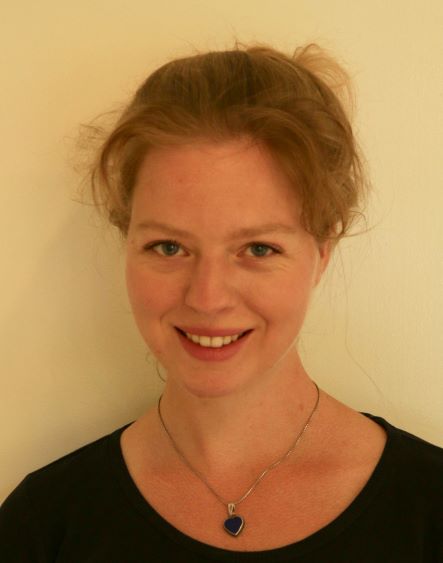
Christina Stinn is a professional translator, proofreader, and editor with a background in ecological research and experience in publishing peer-reviewed articles in academic journals. She is a member of the Chartered Institute of Editing and Proofreading (CIEP) and has a M.Sc. degree in International Nature Conservation. So far her work has included fiction and non-fiction books, academic journal articles, and marketing materials in English and German. She loves working with clients who strive to bring their writing to the next level and enjoys taking part in their journey. Find out more
YOU MIGHT ALSO LIKE: